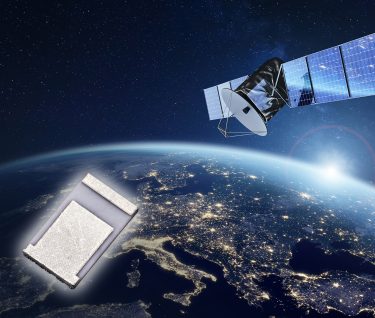
Can you afford to ignore 16% of the U.S. market? How about 70% of Canada? But that’s exactly what device OEMs do when their design relies entirely on cellular.
Vast amounts of land — 16% of the U.S. and 70% of Canada — have no cellular service because they’re too sparsely populated to justify the expense of building cell sites. But that doesn’t mean nothing valuable is going on there. Just the opposite: Rural and remote areas are home to lucrative business operations such as oil/gas mining, cattle ranches, and farms — not just agriculture but also solar and wind.
A major reason why these operations need reliable connectivity is because they’re remote. For example, it’s expensive when an oil wellhead or a center-pivot irrigation system breaks down, and no one notices for days or weeks. It’s also expensive to have people driving an hour more out to each site on a regular basis just to make sure everything is functioning.
That means those companies have a solid business case for equipping remote infrastructure with sensors, controllers, and IoT devices that enable monitoring, control, and troubleshooting from dozens, hundreds, or even thousands of miles away. It also means IoT specialists have a solid business case for ensuring their devices can support those applications when cellular coverage is spotty, slow, or non-existent.
The Rise of NTNs
Non-Terrestrial Networks (NTNs) have emerged as an alternative to cellular for rural and remote areas, as well as the 71% of the Earth’s surface that’s oceans, seas, and lakes. NTNs use low Earth (LEO), medium Earth (MEO), and geostationary orbiting (GEO) satellite constellations such as Amazon/Kuiper, OneWeb, Skylo, and SpaceX/Starlink. Two-way satellite services aren’t new, but today’s NTNs dramatically lower the cost to the point that it’s viable for more applications than ever.
Smartphones such as the iPhone 14 have supported NTN since 2022, and by 2030, nearly half of all makes and models will. One reason is because 3GPP Releases 17-19 are adding capabilities while lowering the cost of implementing NTN. This trend benefits IoT because it can leverage many of the SoCs and other components used for NTN in smartphones.
When assessing NTN as a connectivity option, look at how each constellation’s speed and latency align with the application’s requirements. These vary widely, from tens to hundreds of Mbps and millisecond latencies between single and three digits. (For more implementation insights and tips, including how to choose the right NTN antenna, see “Fertile Ground: Non-Terrestrial Networks for Agriculture.”)
How to Choose the Right Antenna
The choice of antenna directly affects the reliability, performance, power consumption, revenue potential, and competitiveness of an NTN IoT device. One key consideration is how the device will be used.
An example is livestock collars used for applications such as tracking, monitoring vital signs, and creating virtual fences. The antenna’s orientation is likely to change as the collar shifts on the animal’s neck. A good choice is a ceramic loop antenna — such as the Taoglas NLA.01 — because it supports an omnidirectional radiation pattern.
This kind of flexibility also increases a device’s market opportunities. Systems integrators, IoT service providers, and end users can be confident that the device can be deployed in a wide variety of applications because the omnidirectional pattern will ensure optimal performance in any orientation.
The antenna also must support the bands used by the NTN operator(s) that will either be bundled with the device or chosen by end users. For example, the NLA.01 covers 1980-2200 MHz, which means it supports Bands 23 and n256. In fact, all off-the-shelf Taoglas cellular antennas can be used to support both NTN and terrestrial, thus simplifying device design and minimizing BoM costs.
From an integration perspective, ideally an NTN antenna should be directional to maximize performance and reliability. However, because the same antenna is used for both cellular and NTN, an omnidirectional, a linearly polarized antenna is the best option. This is a practical compromise that prioritizes integration convenience over optimum performance.
Hybrid NTN-Cellular Devices
IoT devices also can use NTN as a fallback when cellular is unavailable, just as smartphones do. An example is a telematics solution that needs to maintain constant connectivity with a truckload or shipping container of high-value cargo. If there’s no cellular coverage on the remote highway or rural rail siding, the telematics device can use an NTN to send an alert that a door has been breached or that a geofence excursion has occurred.
Adding NTN support to a cellular IoT device doesn’t necessarily require an additional transceiver and another antenna. Many LEO and 5G bands are close enough that a single antenna can cover both. That’s why modules that support both cellular and satellite have a single RF connector for the antenna. A wideband antenna (600-6000 MHz) is ideal for these types of hybrid cellular-NTN devices because it covers dozens of 4G and 5G bands, as well as NTN bands such as n256.
To learn more about designing NTN and hybrid devices, see:
- Introduction to Non-Terrestrial Networks, a portal that includes real-world case studies, blog posts, and the portfolio of Taoglas NTN embedded and external antennas.
- “Beyond the Horizon: Designing for Unbreakable Connectivity,” an on-demand webinar featuring Taoglas, Murata, and Skylo.
- The Taoglas portfolio of embedded NTN antennas at https://www.taoglas.com/product-category/embedded-antennas/ntn-satcom-embedded-antennas.


